
Pumpkin Play!
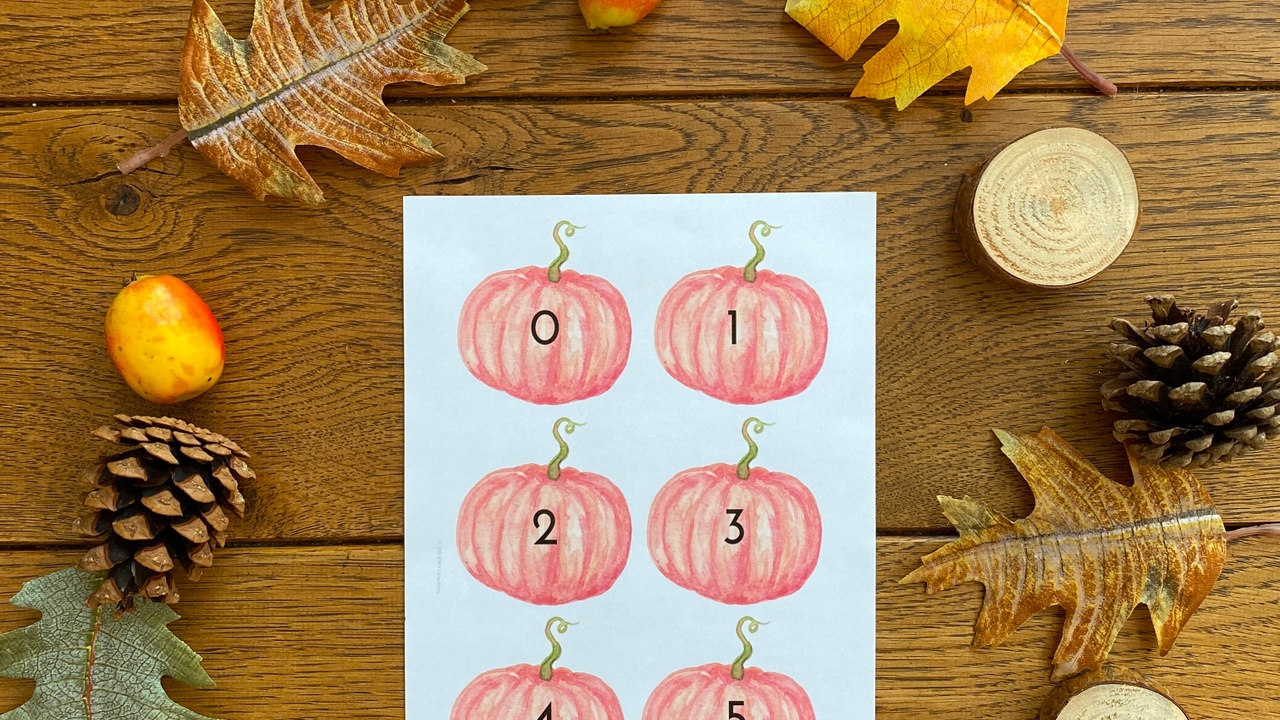

Pumpkin Fever: Slow, Seasonal Pumpkin Play Ideas for Early Years
Pumpkin fever is such a joyful way to celebrate the magic of autumn.
The pumpkins appearing.
The leaves changing colour.
The smell of soup bubbling away.
The tiny hands collecting seeds, scooping, washing, weighing and wondering.
In this blog post I want to share some of my favourite pumpkin play ideas from The Rewinding Your Wanderlust Child Nature Study, and how we can use seasonal hooks in a slower, more child-led way.
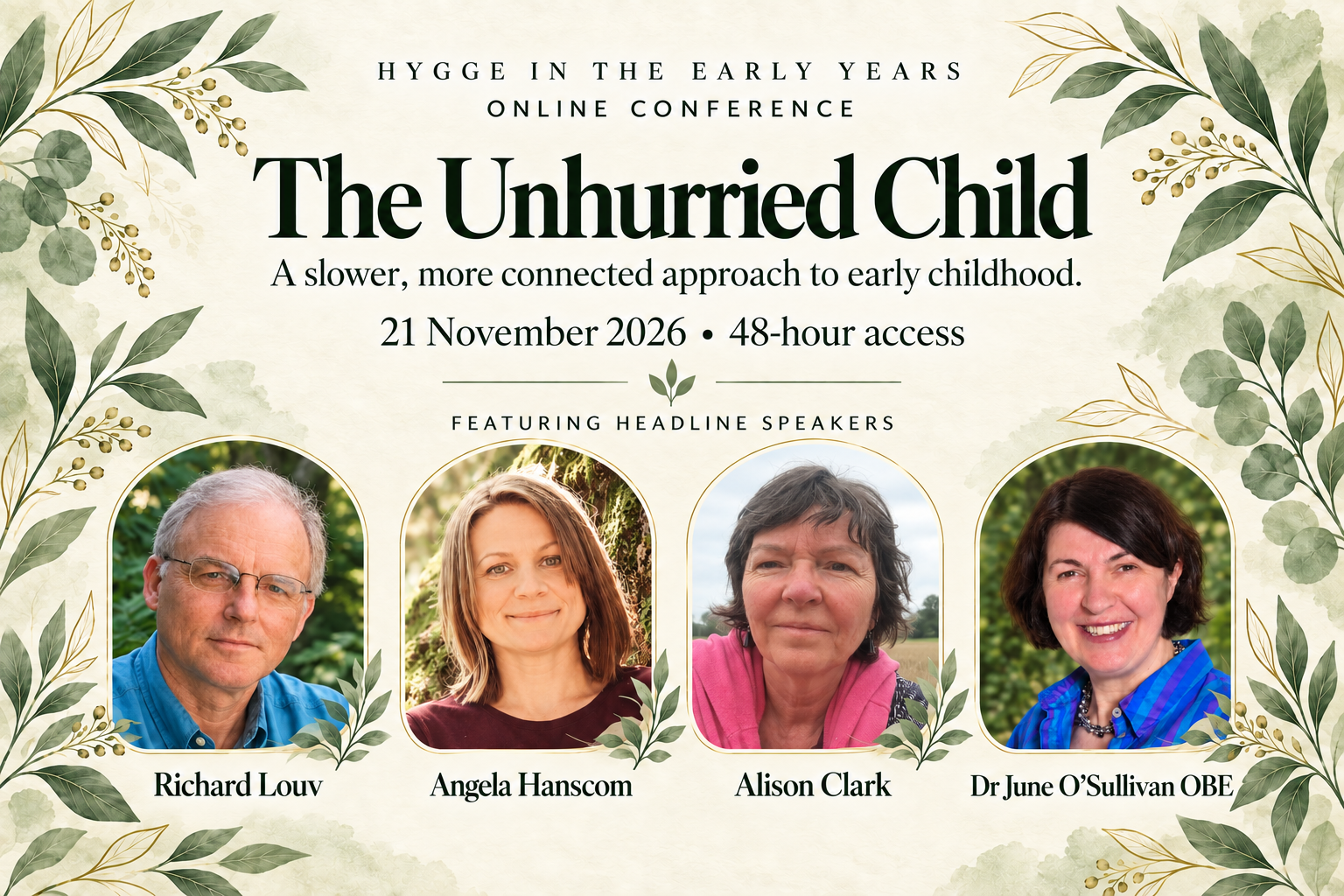
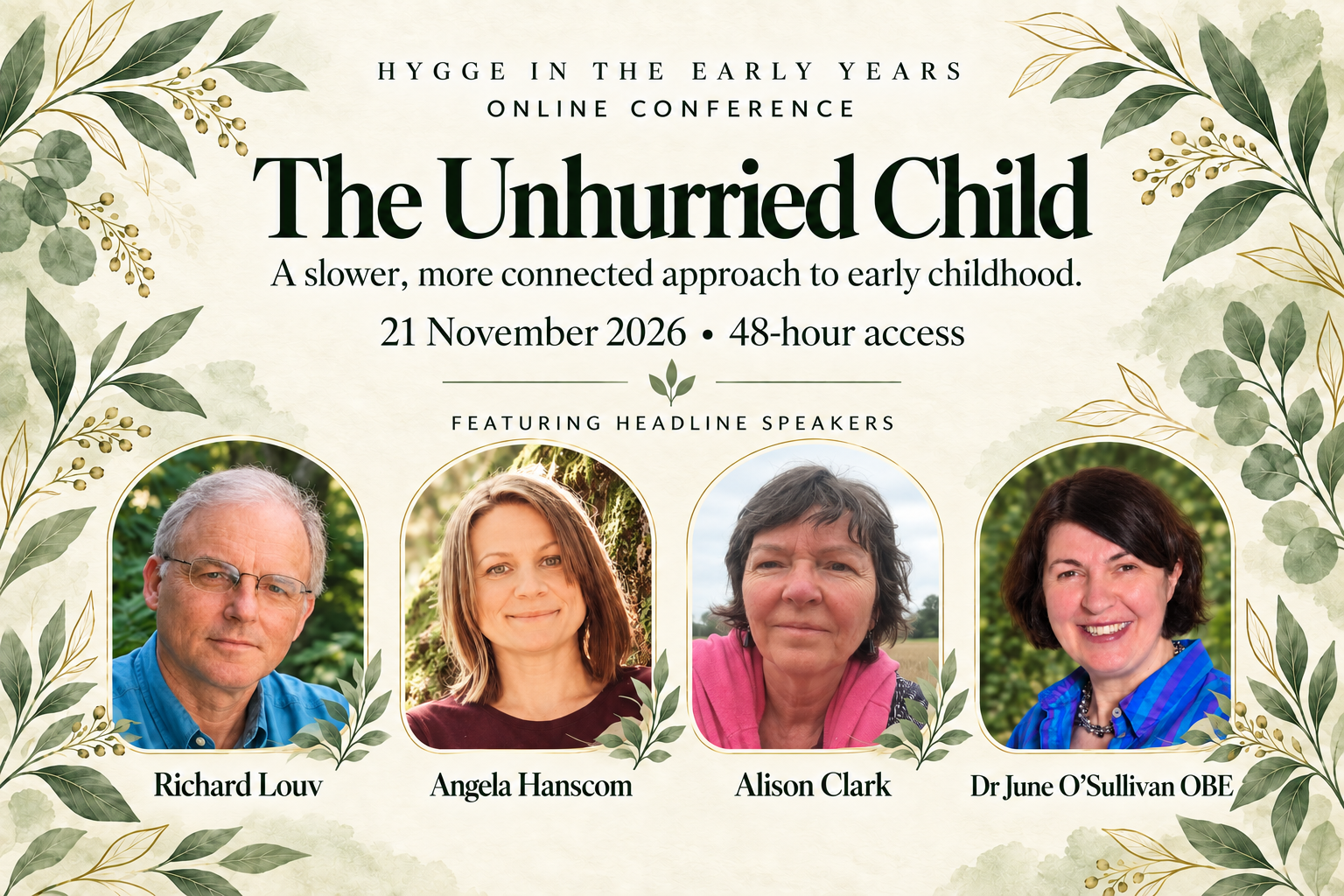
Before we dive in, if this kind of slower, more meaningful seasonal practice speaks to you, you might also love joining me for The Unhurried Child Online Conference. We’ll be exploring slow pedagogy, whole-child development, outdoor learning, behaviour through a nervous system lens, and how we protect childhood in Early Years practice.
Click here to join The Unhurried Child Conference.
Starting With A Hook, Not A Theme Takeover
When planning for seasonal changes in our practice, we don’t want to overwhelm our environment or our teaching by letting one theme completely take over.
Instead, I like to begin with a simple hook.
Something beautiful.
Something real.
Something that catches the children’s attention and gently invites curiosity.
This might be a basket of unusual squash, a large pumpkin on the nature table, a pumpkin patch visit, or a question such as:
“What do you think is inside?”
The hook gives children a starting point, but it doesn’t decide the whole journey for them.
Some children will want to explore it deeply.
Some will return to it again and again.
Some may take it in a completely unexpected direction.
And some may decide they don’t want to engage with it during their child-initiated play at all.
 And that’s okay too.
That is the beauty of slow pedagogy. We offer rich possibilities, but we leave space for children to meet them in their own way.
What Might This Look Like In Scandinavian-Inspired Practice?
In many Scandinavian early years settings, autumn wouldn’t be something that only happens on a display board or in a tuff tray.
It would be lived.
Children would be outdoors noticing the colder air, collecting leaves, visiting woodland spaces, cooking over time, watching decay, handling real natural materials, moving their bodies, and returning again and again to the same seasonal changes.
A pumpkin might not become a one-day activity.
It might become a week of wondering.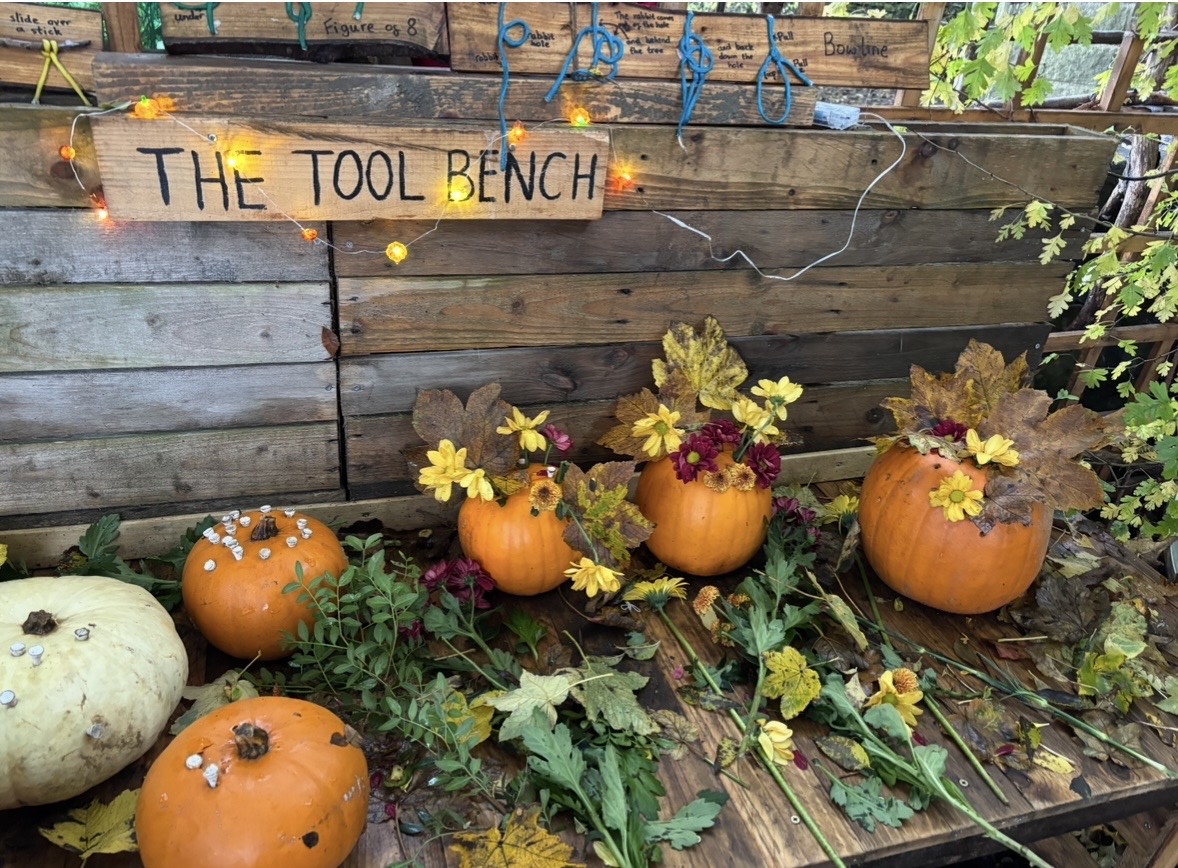
A reason to visit an allotment.
A chance to cook together.
A mathematical investigation.
A story prompt.
A sensory exploration.
A gratitude ritual.
A way to connect with harvest, food, land and community.
This is what I love about seasonal practice. It doesn’t need to be busy or over-planned. It can be simple, slow and deeply meaningful.
Pumpkin Hook Ideas
Here are some lovely starting points you might like to try:
- Mark make what you’re thankful for on a large pumpkin.
- Visit a pumpkin patch, farm shop or allotment and choose your own pumpkin for the setting.
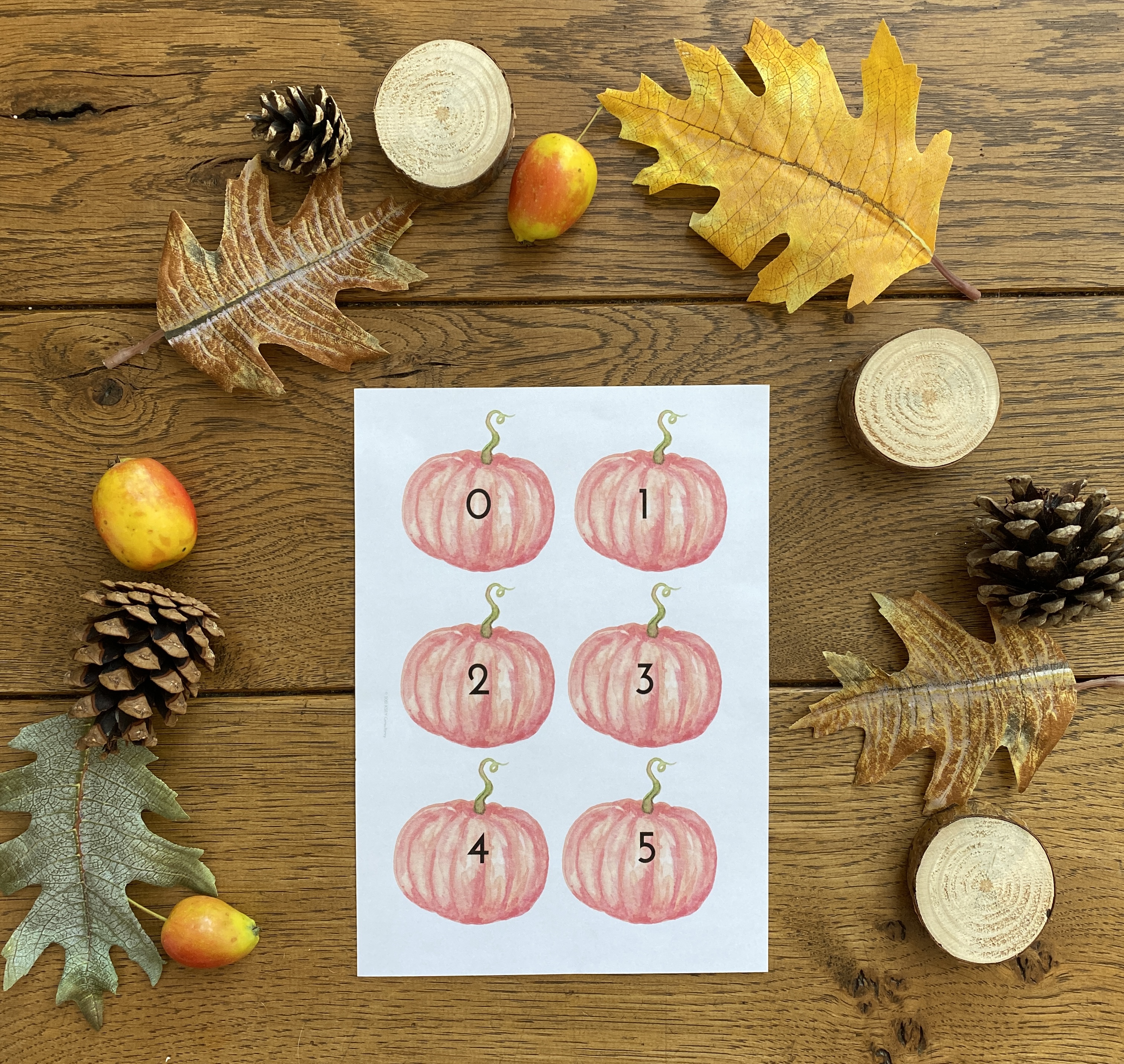
- Provide a range of different sized squash and pumpkins with wooden numbers, Numicon plates, weighing scales and paper for children to record their own explorations.
- Place a pumpkin on your nature table with magnifying glasses, clipboards and drawing materials.
- Invite children to predict what might be inside before cutting it open.
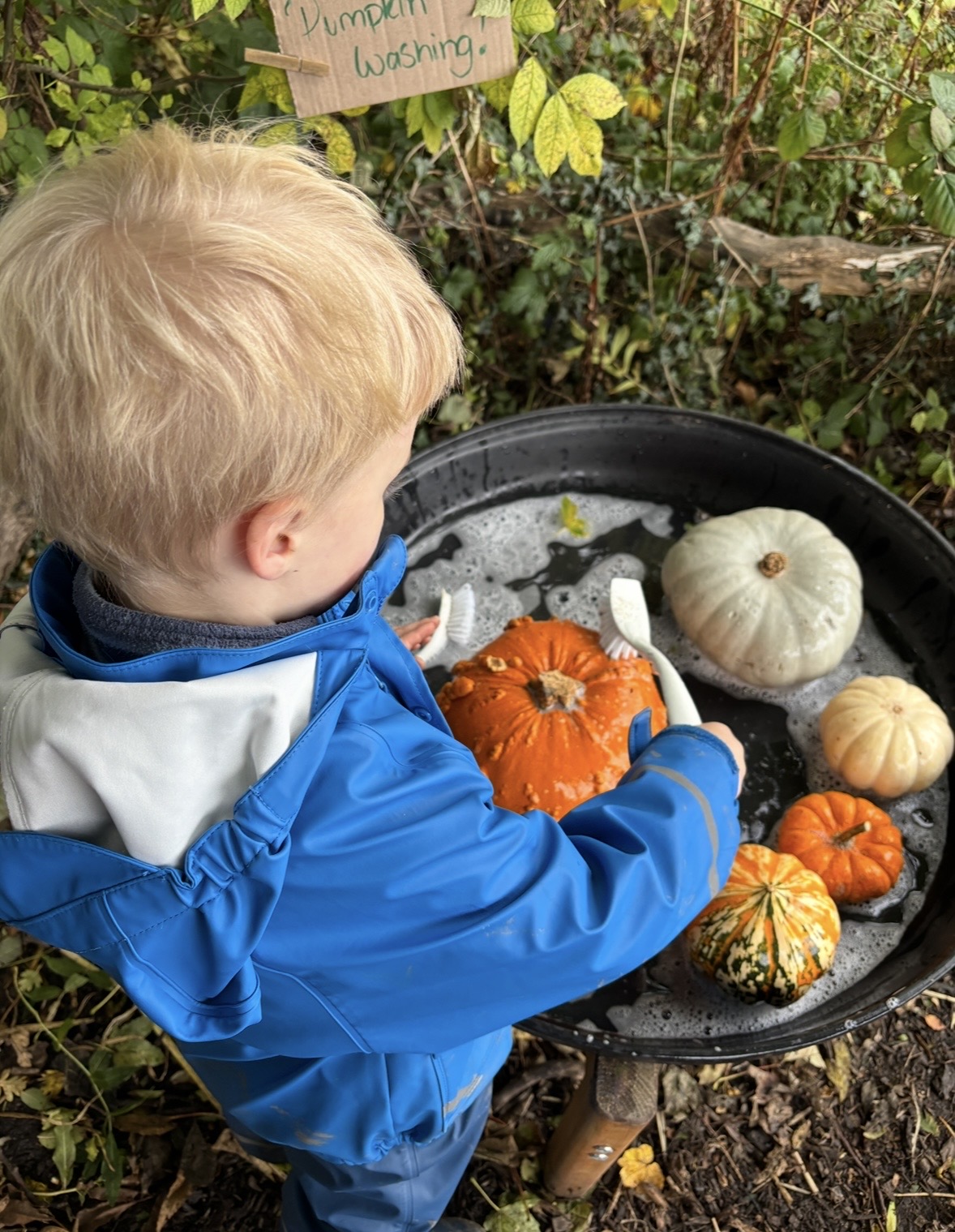
- Offer pumpkins for washing, scrubbing and caring for outdoors.
- Create a pumpkin investigation station with scoops, bowls, tweezers and seed trays.
Taking The Learning Further
If the children show an interest in the pumpkin hook, follow their curiosities and see where it takes you.
Over the years, children I have worked with have taken pumpkin learning in so many wonderful directions.
We have:
- Baked our own pumpkin cake.
- Made pumpkin soup and shared it with friends.
- Printed with different sized pumpkins and squash.
- Explored repeating patterns and ordering by size.
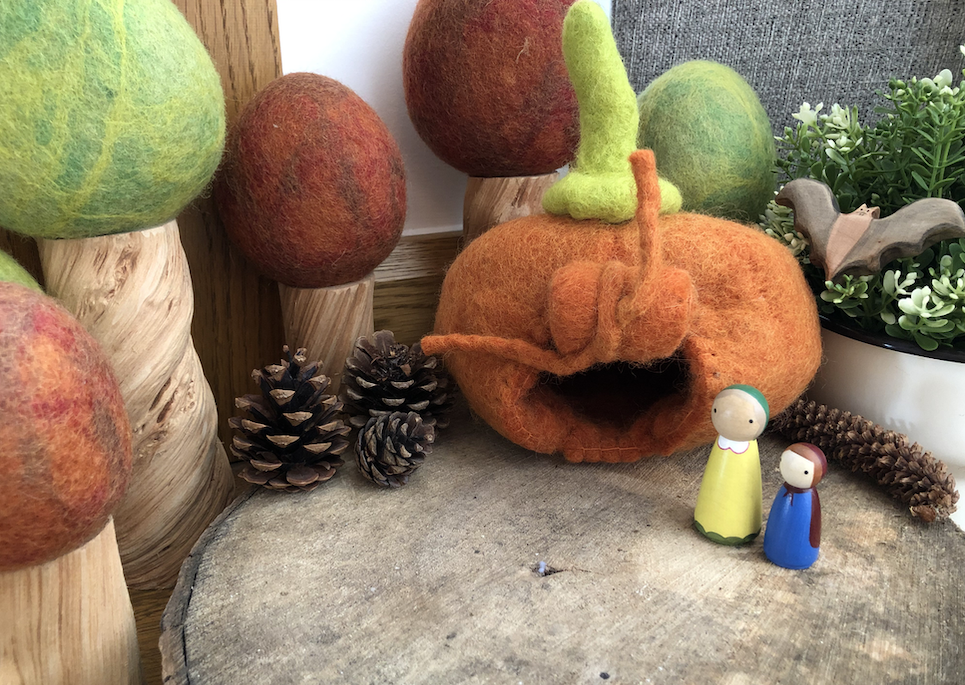
- Created stories with felted pumpkins and small world resources.
- Counted and sorted pumpkin seeds.
- Read Cinderella and transformed a pumpkin into a carriage for storytelling.
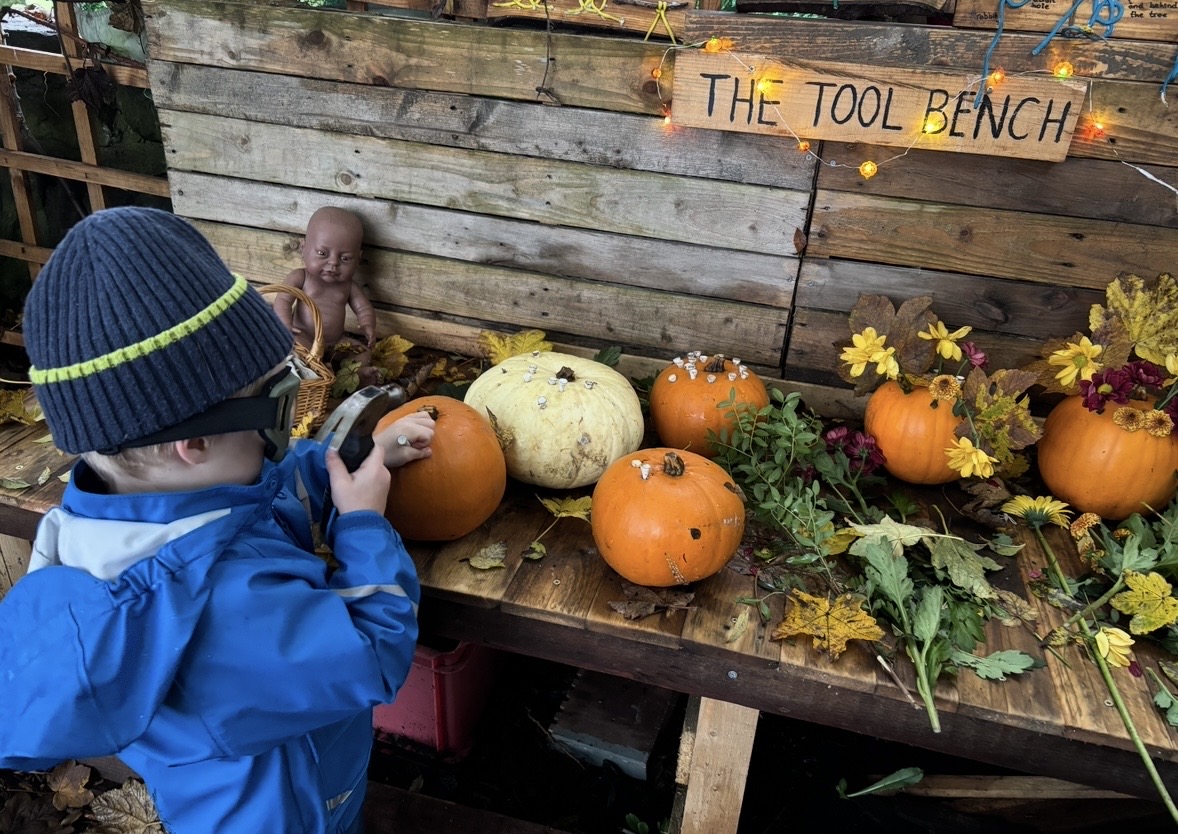
- Decorated pumpkins with paint, feathers, jewels and natural materials.
- Washed pumpkins outside with warm soapy water.
- Written about what makes us grateful on a pumpkin.
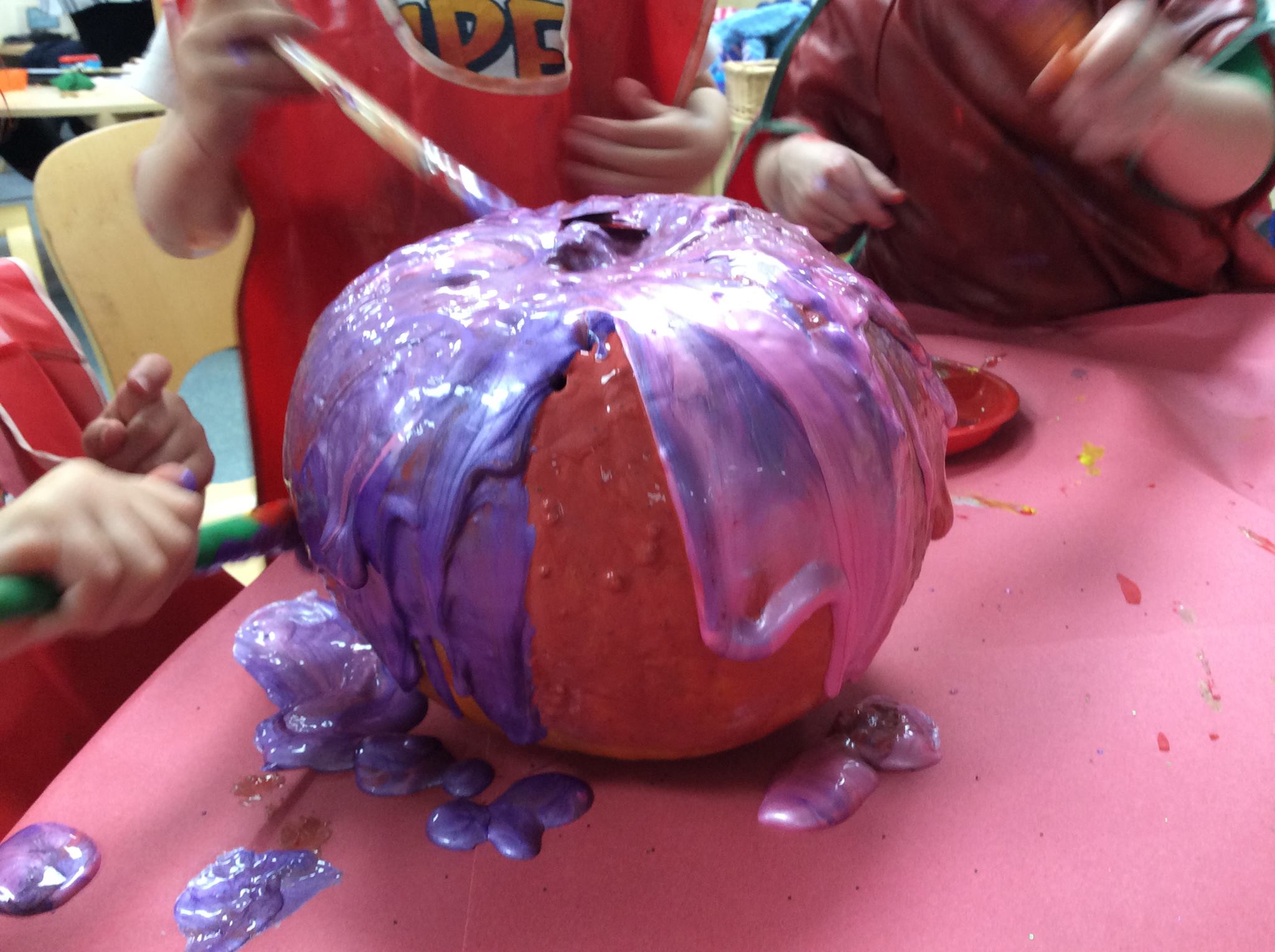
One of my favourite moments came completely from the children.
“Can we see what happens if we pour paint on our pumpkin?”
Yes.
And it was wonderful.
There was so much language.
So much prediction.
So much wondering.
“What will happen if we add more?”
“Where will the colours go?”
“What else could we pour?”
“Can we roll it?”
“Can we mix it?”
This is where learning becomes alive. Not because we have tightly controlled the outcome, but because we have noticed the moment and allowed the children to think, test, talk and return to their ideas.
Even More Pumpkin Play Ideas To Try
Here are some simple ways to keep pumpkin play meaningful and child-led:
Pumpkin Investigation
Offer pumpkins and squash in different sizes, shapes and colours. Add magnifying glasses, scales, tape measures, clipboards and pencils.
Children might weigh, compare, count, draw, sort or simply handle and notice.
Pumpkin Soup Café
After reading Pumpkin Soup by Helen Cooper, create a simple soup café role play area with bowls, spoons, recipe cards, herbs, wooden vegetables and menus.
You could make real pumpkin soup together too.
Pumpkin Seed Maths
Scoop out the seeds and use them for counting, sorting, subitising, estimating and comparing quantities.
Children could create their own seed collections, count in groups, or make number labels.
Pumpkin Printing
Use slices of pumpkin and squash for printing. Explore size, shape, colour mixing, repeating patterns and texture.
This can also lead beautifully into conversations about symmetry, circles, curves and natural patterns.
Pumpkin Gratitude
Invite children to mark make, draw or dictate something they are thankful for onto paper leaves or directly onto a large pumpkin.
This can become a gentle autumn ritual of noticing what matters.
Pumpkin Small World
Use felted pumpkins, wooden figures, animals, autumn leaves, conkers and fabric to create a seasonal small world.
This might become a farm, a woodland, Cinderella’s carriage, a harvest celebration or something entirely imagined by the children.
Decorate a Mouse House for Autumn
We've transformed our doors house into a mouse house and each season we love to decorate it.
Books To Support Pumpkin Play
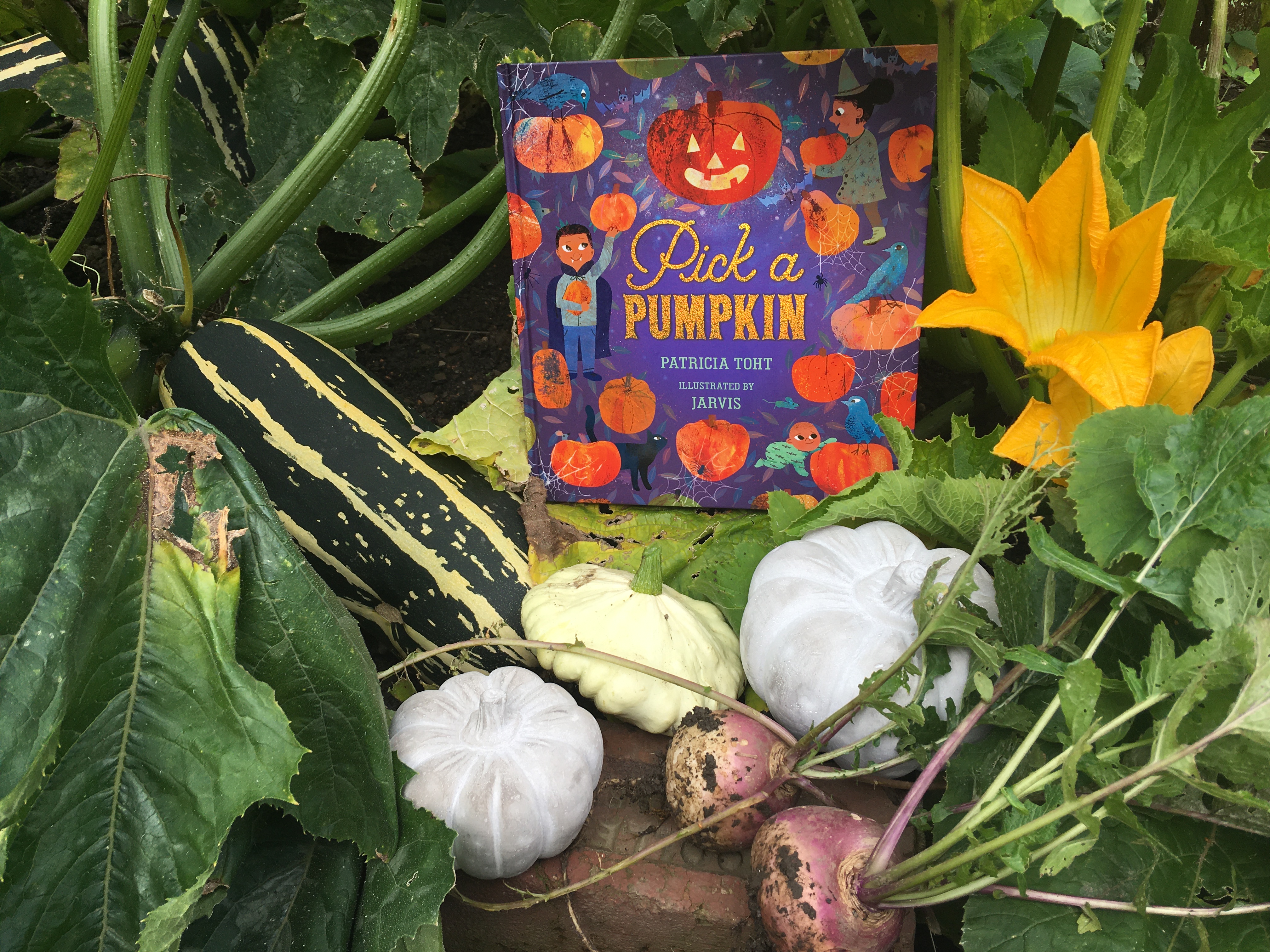
Here are some lovely pumpkin and autumn books to support your provision:
- Pumpkin Soup by Helen Cooper
- Pattan’s Pumpkin: An Indian Flood Story by Chitra Soundar
- Five Little Pumpkins by Ben Mantle
- Pick a Pumpkin by Patricia Toht
- Too Many Pumpkins by Linda White
- Pumpkin Jack by Will Hubbell
- How Many Seeds in a Pumpkin? by Margaret McNamara
- Christopher Pumpkin by Sue Hendra and Paul Linnet
- The Roll-Away Pumpkin by Junia Wonders
- The Very Best Pumpkin by Mark Kimball Moulton
Rewilding Your Wanderlust Training
If you would love more support with bringing seasonal, nature-rich, child-led practice into your setting, you may also enjoy my Rewilding Your Wanderlust training.
This training helps you move beyond one-off nature activities and into a deeper, more connected way of working with the seasons, the outdoors and children’s natural curiosity.
It supports you to think about:
- How to use nature as a meaningful part of your curriculum.
- How to plan from children’s interests.
- How to create slower, richer seasonal experiences.
- How to bring more outdoor learning into everyday practice.
- How to make nature study feel joyful, simple and sustainable.
Wanderlust Resources To Support Your Practice
Our digital harvest and pumpkin collection includes:
- A postcard
- Pumpkin anatomy
- Pumpkin life cycle
- Pumpkin life cycle cards
- Quote card
- 2 nature ideas to try
- 1 science idea to try
- Pumpkin counting 0-10
- Autumn leaf anatomy
- Autumn leaf spotter sheet
Click here to learn more and download.
A Slower Way To Celebrate Autumn
Pumpkin play doesn’t need to become a full theme that takes over every corner of the room.
It can begin with one beautiful hook.
A pumpkin on a table.
A visit outdoors.
A story.
A question.
A basket of squash.
A moment of curiosity.
From there, we watch.
We listen.
We respond.
We allow the children to show us what matters.
That is where the richest learning often begins.
And if you would love to explore more of this slow, connected, whole-child approach, I’d love to welcome you to The Unhurried Child Online Conference.
Together, we’ll be thinking about how we protect play, honour childhood, support behaviour through a nervous system lens, and create Early Years practice that gives children time to wonder, move, connect and grow.
Click here to join The Unhurried Child Conference.
Have you tried my FREE Introduction to Hygge Training yet?
Online Conference
Online Conference
Curious about slow pedagogy?
”The Unhurried Child"
21st November 2026 (48 hour access)
A slower, more connected whole child approach to early childhood.
One inspiring online conference for educators ready to protect play, nurture wellbeing and give childhood back it's time.
